In Korea, genealogy used to be important. They kept volumes of books of ancestors and descendants. And it so happens that the Hyun family also has a multi-volume book of names. Last year (2025), I finally found the Hyun clan association and registered my wife and two kids into the genealogy registry. Our records can be found here:
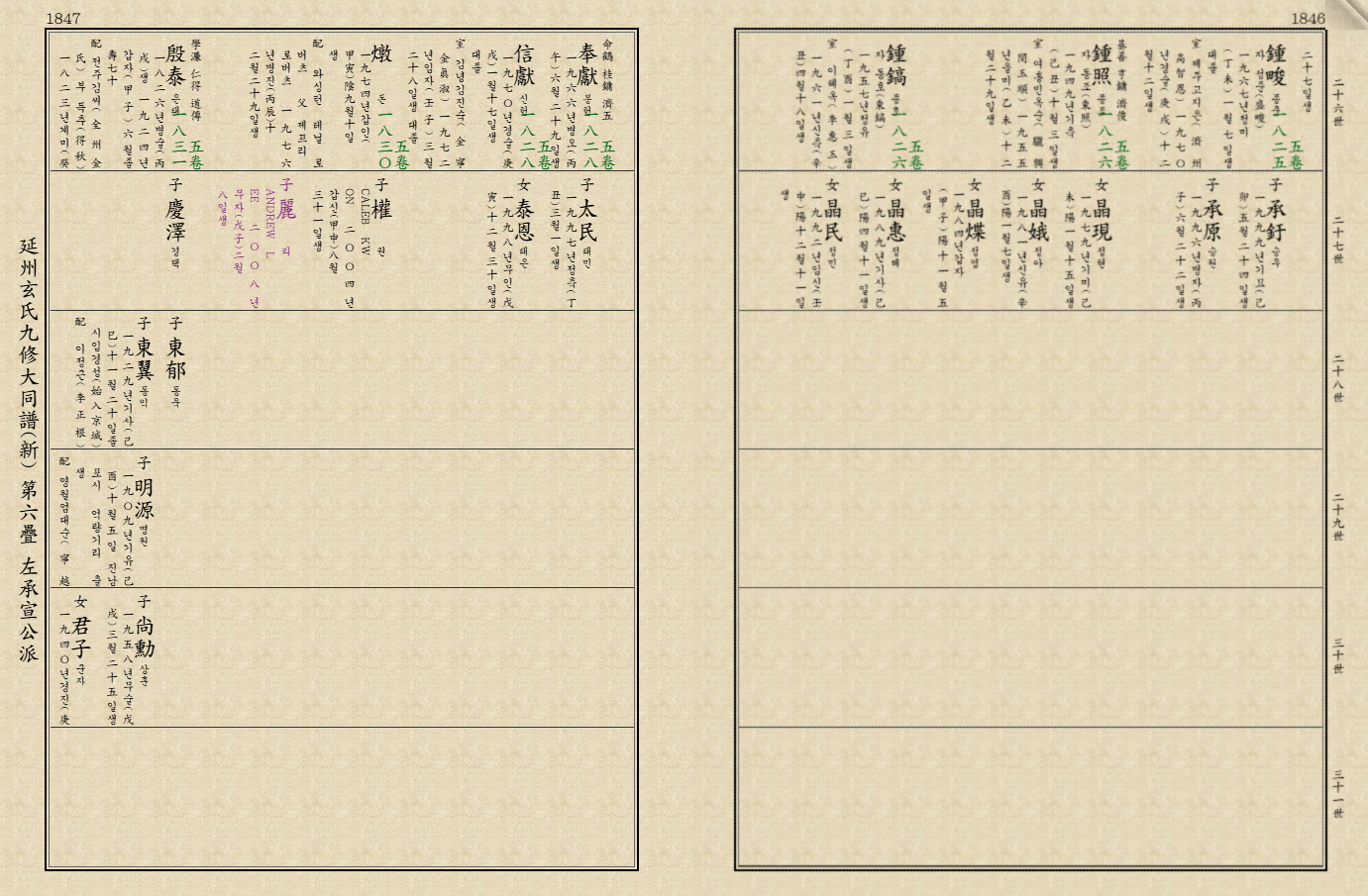
Notice we are on page 1847. There’s a lot of names. I am the 26th generation since the records were kept. It took some diligence to figure out how to register my wife and children’s names. The difficult part is that you need a Korean phone number to pay the association. (I think it was on the order of a few hundred dollars to register). I had to get my aunt’s help (who lives in Korea and has a Korean phone number) to complete the registration.
If you are also looking to register yourself or your family members in the Hyun Family registry, I can point you to where to start: http://sudan.hyunc.kr/home If you need help, feel free to reach out.
If you believe you may have already been registered, you can search here:http://hyunc.kr/pedigree/pedigree_list.php
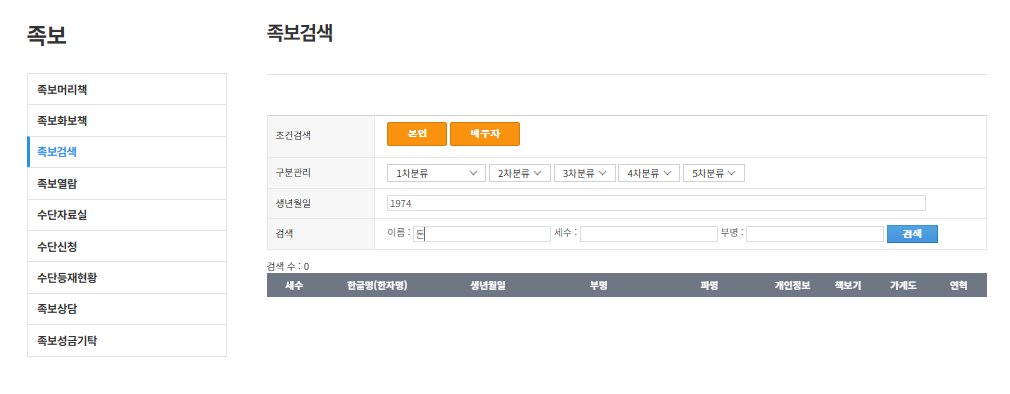
If you navigate this family tree all the way to the top, there is one man named Hyun Dam Yun.
When I first started my genealogy studies of my family (back in 2003), I was worried that I would never understand what any of this meant because most of it was in chinese. And even the Korean was difficult. I had considered paying someone to help me translate sections of the book. But, now some 20 years later, it has all been published on the Internet, and it merely takes a few right clicks to “Translate to English”. What an amazing time we live in.
Here is a little history on the first Hyun in the registry: http://hyunc.kr/about/origin.php
A little history for those that are interested or perhaps, you’re an English speaking Hyun family member and want to know more about where our family came from:
Origin of the Yeon Ju-hyun Clan Founder
The Origin of the Sijo and the Sculpture of Yeon Juhyun
Origin of the Founder
The founding ancestor was from Yeonju, the old name of present-day Yeongbyeon in North Pyongan Province, and was Hyeon Dam-yun (玄覃㣧), who made significant contributions to the country as a Grand General during the reign of King Uijong of Goryeo.
Gong, who possessed both bravery and wisdom, served as the commander of Yeonju Fortress. During King Myeongjong of Goryeo, he quelled the rebellion led by Jo Wi-chong and was promoted to the position of senior minister as Munhasirang Pyeongjangsa, later being granted the title of Lord of Yeonsan (延山君).
The Goryeosa records that Gong’s great loyalty and meritorious service “will shine as a giant star of the nation.” The three sons of the founding ancestor also made great contributions to the nation: the eldest son Deoksu (德秀) was granted the title of Lord of Seongsan (星山府院君), the second son Hu (利厚) was granted the title of Lord of Gwangseong (廣城君), and the third son Deokyu (德裕) was made Lord of Huiwon (檜原君). Their descendants, throughout the Goryeo, Joseon and modern periods, produced many talented individuals, and it is said, “There is no one foolish in the Hyeon clan.” He prides himself on the tradition of ‘Xuanwu Duncai’ (玄無遲才).
The Hyeon clan (玄氏) has maintained a lineage of nearly a thousand years with Yeonju (延州) as their single clan origin.
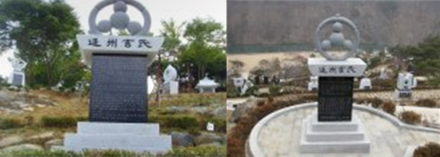
Description of Yeon Ju-hyun’s Sculpture
This work is a sculpted representation of the Yeon Ju-hyun emblem logo. The large ◯ (circle) at the center represents a single root, meaning ‘one root’ (一根), meaning the center of the single heaven and the universe, while the three small ◯ (circles) symbolize the harmony of the three origins (Samwon) and their harmony. Each region, spanning three thousand li of rivers and mountains, symbolizes prosperity and harmony through wisdom and spirit for generations of descendants, promising endless leaps forward.
Origin of the Yeonjuhyeon clan <Founding ancestor: Hyeon Dam-yun (玄覃胤)>
Yeonju (延州) is a high title for Yeongbyeon (寧邊) in North Pyongan Province, and Yeongbyon County is a combination of Yeongju (迎州) and Muju (撫州). Yeongju was originally Milun-gun (密雲郡) during the Goryeo period, but in 670 (the 21st year of King Gwangjong), it was renamed Yeonju (延州) with a Jijusa (知州事) appointed. In 995 (the 14th year of King Seongjong), a defense envoy was appointed, then promoted to Yeonsanbu under King Gongmin (恭愍王), and in 1413 (the 13th year of King Taejong of Joseon), it was reorganized as Dohobu.
Muju was originally Yunnan County (雲南郡) of Goryeo, but in 995 it was called Muju Defense Commandery, then transferred to Taeju (泰州) during King Gongmin’s reign. In 1391 (the 3rd year of King Gongyang), a supervisory office was established, and during King Taejong’s reign, it became Musan-hyeon (撫山縣). In 1419 (the 11th year of King Sejong), Yeonsan and Musan were merged and renamed Yeongbyon. During King Sejo’s reign, Yeonju was divided and incorporated into Unsan-gun. After various changes, it was renamed Yeongbyeon-gun in 1895.
The founder of the Hyeon clan (玄氏), Hyeon Dam-yun (玄譚胤), was originally from Yeonju in Pyeongan Province (平安道). He served as a general under King Uijong of Goryeo, and for his merits in quelling the rebellion led by Jo Wi-chong during King Myeongjong’s reign, he was promoted to Munhasirang Pyeongjangsa (門下侍郎平章事) and was enfeoffed as Lord Yeonsan (燕山君).
Thus, descendants honored Hyeondamyun (玄覃胤) as their founding ancestor and adopted Yeonju (延州), the fiefdom name of the founder, as their bon-gwan (本歸), continuing the lineage.
The Hyeon clan (玄氏) has as many as 106 branches including Yeonju, Seongju, Changwon, and Suncheon, with as many as 106 copies recorded in literature. However, only about 30 bon-gwan survive today, and all their family names are merely the names of their ancestral and ancestral descendants, who honor Siranggong (侍郞公) Hyeondam-yun (玄譚胤) as their founder. Therefore, when the Jeongmyobo (丁卯譜) was compiled in 1747 (the 23rd year of King Yeongjo), the Yeonju Hyeon clan (延州玄氏) was unified as the compilation of the Jeongmyo Genealogy. Even during the Imsulbo (壬戌譜) published in 1982, the bongwan was unified under the Yan system according to the consensus of the clan.
Looking at the representative connections that brought honor to the family, among the three brothers of the founder Dam Yun (譚胤), Deoksu (德秀) and Hu (利厚) distinguished themselves by helping their father suppress the rebellion of the rebel Jo Wi-chong (趙位寵). The eldest son, Deoksu, served as an attendant official and governor of Annam, then as an inspector of Gyeongsang Province, and during King Sinjong’s reign, he was promoted to Minister of War and was enfeoffed as one of the eight lords. In Su, he was transferred to the position of Lord of Seongsan (星山府院君), and his descendants later became the Seongju Hyeon clan (星州玄氏). He was registered separately.
The second son, Hu Hu (利厚), served as the Inspector of Gyeongsang Province and was enfeoffed as Lord of Gwangseong (廣城君). In 1186 (the 16th year of King Myeongjong), Deokyu (德裕), who passed the civil service exam (文科), was the third son of the founding ancestor. He served as Minister of Personnel and Attendant Gentleman of the Ministry of Rites, then was assigned as the Governor of the Western Capital (西京守), later served as Grand Master of the Golden Purple Light Prosperity (金紫光祿大夫), and was later enfeoffed as Lord of Hinaegun (檜原君). His descendants later branched into the Changwon Hyeon clan (昌原玄氏). Wonmi, the second son of Seongsan Buwongun Deoksu (德秀), was granted the title of Suncheon Lord (順天君) as Yeongdongjeong (令同正), so his descendants were divided into the Suncheon Hyeon clan (順天玄氏).
The Hyun clan, who gained fame for military merit during the Goryeo dynasty, came to the Joseon dynasty when his ninth-generation descendant Gyu (珪) passed the civil service exam during King Sejong’s reign and served as Pangunja Gaeseong (判軍資監事), later as magistrate of Gobu County (古阜郡守), and later held positions such as Hongmungwan (弘文館校理) and Ministry of Personnel (吏曺正郞). His son Deukwon (得元) was known for his exceptional integrity and filial piety and friendship from a young age. He passed the civil service examination during King Sejong’s reign and was appointed governor of Seongju in 1454, where he governed and cared for the people. However, when King Danjong abdicated the following year, he resigned from office and, together with his son Boson (寶孫), returned to Mukbang-dong in Yeongcheon, where he lived in seclusion and observed the imperial duties for life, until the end of his life.
Meanwhile, Bin’s son Iksu (翼洙), though his family was poor, was known for his integrity and was called a recluse. Although he was recommended to serve as Attendant at the Tomb of Jireung, he did not go out to care for his elderly parents and instead studied Zhu Xi’s teachings.
According to the ‘Jukchang Hanhwa’, Seok-gyu (錫圭), son of Left Counselor Hyosaeng (孝生), went to Hanyang to take the civil service examination as follows. Before Sejo ascended the throne, he was holding a banquet with several princes at Jecheonjeong Pavilion, and among the scholars who had gathered to take the civil service exam, he pointed to one and called him over.
King Sejo treated the scholar with proper etiquette and treated him as a guest, asking his name and residence. Then, looking around the audience, he asked, “Is there anyone among them who has a virgin daughter?” he asked. People are looking at the scholar, whose attire is worn and his appearance haggard from the long journey, but Hyo-ryeong, who was nearby, has a maiden daughter and is currently looking for a marriage partner.” King Sejo replied, “If you want to find a good son-in-law, there is no one better than this man.” In response, Grand Prince Hyoryeong said, “It seems the family name may not be suitable,” to which Sejo advised, “Since many great figures have come from the wilderness since ancient times, it is best to arrange a marriage.” Later, Seowongun (瑞原君) investigated the scholar’s family and found that it was a family with a low literary reputation in Yeongnam (嶺南), so he made him his son-in-law, and that scholar was none other than Seok-gyu (錫圭). He served in various offices and handled state affairs with integrity and fairness, earning the king’s deep trust through positions such as Minister of Justice and Right Counselor.
In addition, Sangbyeok (尙壁), a renowned Neo-Confucian scholar of his time, left behind many works such as ‘Gwanbong Munda (冠峰問答)’ and ‘Gwanbong Yugo (관峰遺稿)’. Scholars such as Yakho (若昊) and Deokyun (德潤) and Jaedeok (在德), who excelled in literature and calligraphy, contributed to the family’s prosperity. In the late Joseon period, independence activists Byeonggeun (炳瑾) and Ikcheol (益哲) continued the lineage, bringing honor to the family.
The Origin of the Korean Hyun Clan and the Chinese Han Surname Hyeon (Yeonju Hyeon Clan Ancestor/Origin)
1. The Origin of the Joseon-related Hyun ClanThe Hyun clan of the Johan lineage honors the court attendant Gen Tam-in (mid-12th century CE) as its founder.
The Korean (Korean) branch Hyun-shi uses ‘Yeonju’ as their unified origin (本歸), and ‘延州’ is the old name of Ningbyeon, North Pyongan Province, Joseon.
The Attendant Gentleman Hyeon Tan-in was originally from Yeonju, Pyeongan Province, and his family was not wealthy due to his grandparents. From the age of eight or nine, he was tall and possessed outstanding wisdom and bravery. As he grew, he read the classics extensively, enjoyed the Left Commentary of the Spring and Autumn Annals, his grandson, and the Wu Zi Bingshu, and after reading them all, he would sigh and say, ‘In such turbulent times, how can a true man remain at home reading only at home?’ From then on, he diligently practiced archery and horse running.
The deep valleys of Yeonju Geomgak Mountain were overgrown with woods, making it a place people avoided at night. According to records from the Attendant General’s records, when he was young, one day he entered Jiange Mountain alone, but as night fell in the mountains, it became a pitch-dark night.
At that moment, a pitch-black mountain spirit appeared, exclaiming, ‘Lord Hyeon-jang has arrived,’ and was startled, then spontaneously raised a torch to guide the lord’s path. This means that by then, the lord’s courage and spirit, who would later become the Grand General of Goryeo, were so remarkable that even ghosts were terrified.
The Duke had not yet married until he turned 19, but the northern Jie barbarians frequently violated the border, causing disturbances. Enraged, the Duke himself raised a militia, drove the noisy foreign enemies far away, and pacified the borders. King Yijong of Goryeo appreciated this by granting a special reward, appointing the duke as the governor of Yeonsan Prefecture, and personally arranged marriages for the noble families to be chosen. From that moment, the duke’s reputation became widely known, and the Hyun family was first registered in the Goryeo official registry.
In China’s Song dynasty, the Jurchen rebellion broke out and requested reinforcements from Goryeo. You were appointed as the Grand General of Reinforcements, leading the volunteer troops, and went to war in China, achieving great merit and making improvements. Thus, the Song emperor bestowed great rewards upon the Duke and specially sent envoys to Goryeo to praise his merits and earnestly urged the Goryeo king to greatly promote him in office. Afterwards, his official rank rose several times.
His achievements are also recorded in the Goryeo Myeongsin Record.) However, the Duke despised the chaos in royal politics, resigned all his posts, and returned to his hometown. He built a villa beneath Oknyeobong and wished to spend his remaining years peacefully.
However, in the fourth year of King Myeongjong of Goryeo (1174 AD), the Western Commander Jo Wi-chong harbored rebellious intentions and raised an army, sweeping through the north of Balyeong like a horde. The lords of over forty fortresses all betrayed the king and hurried to surrender to the rebels. However, upon hearing of the rebellion, the Duke resolutely chose the great cause, persuaded the general defending Yanzhou Fortress, inspected the small army, and willingly set out with his two sons to suppress the rebels. Zhao Weichong was greatly frightened and tried to bribe the Duke by resorting to temptation and threats. However, the Duke firmly refused and fought fiercely against the rebels, winning four out of four battles and decisively crushing Zhao Weichong’s momentum. Impressed by the Duke’s noble virtue and outstanding wisdom and bravery, the neighboring Jin king personally dispatched his generals and reinforcements to assist the Duke. Together with his two sons, he cooperated with Jin reinforcements and ultimately captured and killed the rebel leader Zhao Weichong, thereby saving the country and achieving another great merit. Thus, the Duke’s official position was elevated to Chancellor of the Secretariat and granted the title of Lord of Yeonsan, and both sons were also granted high offices. (This historical record of the Duke can also be found in the Goryeosa.)
This happened at the funeral after the Duke’s death. When the funeral procession reached a place called Wuli Pavilion, the villagers had all gathered, so the funeral was stopped, and a simple set of wine and fruit was set out in front of the spirit tablets before the ceremony to pay their respects. After the ceremony, when the bier was about to be lifted again, it seemed rooted in the ground and did not move. Someone asked, “Is there a reason you wish to be buried here?” and only then did the funeral bier move, so the tomb was ultimately established there.
Afterwards, the descendants of the Hyun clan made great efforts to finally locate the gong’s tomb, honoring Hyeon Tan-yin as their founding ancestor and continuing the lineage by using the progenitor’s feudal lord name Yanju as their origin of the ancestral temple. During the Goryeo period, the Hyeon clan was mainly distinguished for military merits, and during the Joseon dynasty, it produced as many as 20 successful civil service exam candidates.
The Hyeon clan has as many as 106 bon-gwan branches, including Yeonju, Seongju, Changwon, and Suncheon, according to historical records, but only about 30 of these bon-gwan survive, and all of their official residences are merely place names of the same ancestor and ancestor, who honored Sijang Gong Hyun Tan-yin as the founder. Therefore, when compiling the Jeongmō genealogy in 1747 (the 23rd year of King Yeongjo’s reign), the family unified the bon-gwan as Yeonju Hyun-csi, and in the 1982 Imsu genealogy, the clan agreed to unify the bon-gwan as Yeonju.
According to the 1915 census by the Korea Economic Planning Board, the Hyun surname (玄氏) had a total of 88,824 people living in South Han, accounting for about 0.2% of the total South Korean population.
2. A Preliminary Exploration of the Xuan Surname of the Han Chinese
In the Hyun clan of the Joseon (Han) lineage, Hyeon Tan-in, who was appointed as the Chancellor of the Secretariat and conferred the title of Lord of Yeonsan by King Myeongjong of Goryeo in 1174, is honored as the founder of the Xuan clan.
Although no documentary evidence has been found to verify his ancestral lineage, there is no doubt that at some point he came from China and naturalized in Goryeo. This is because, in the history of the Korean people, from the time of King Munjong of Goryeo (1047 AD), the common people were finally allowed to use surnames, but the Hyeon clan surname did not originate from Goryeo.
The birth year of Hyun Tan-in, the founder of the Hyun clan of the Joseon (Korean) lineage, is estimated to be around 1130 AD. Therefore, his ancestors crossed over from China and settled in Goryeo later, about 1130 years ago.
At that time, the Chinese mainland was in the early Southern Song (1127~1279), and in the northern region adjacent to Goryeo, the Liao (907~1125) and Jin (1115~1234) dynasties were in full swing, making it a period of great turmoil with ongoing warfare throughout China.
According to records, at that time, there was a Han Xuan clan village in the Tai’an area of Shandong, China, where generations had lived for generations. However, from the late Northern Song (960~1127) onward, amid constant warfare and the increasingly distressed northern Hu people, many villagers were forced to flee their beloved hometowns in the mainland.
The ancestors of Hyun Tan-in, the founder of the Hyun clan of the Korean lineage, likely left the chaotic China during that period and moved to the relatively stable northern Goryeo.
In the later period, during the Mongol Wars, the Xuan clan of the Han people in Shandong, China underwent large-scale migrations. Most of the people who left the village settled in a new place about 10 li northwest of present-day Qian’an City, Hebei Province, and the village was named ‘Dazhuang’. Afterwards, Dazhuang became the Xuan clan ancestral origin not only in the Qian’an area but also in the Jidong region. Even today, if you go northwest of Dazhuang Village in Qian’an City, Hebei Province, there is the site of the Xuan family ancestral tomb.
In 1887, some Han Chinese members of the Xuan clan from Dazhuang Village moved to an area twenty li east of Qian’an City, and the new village was named ‘Xinzhuang.’ The Han Xuan clan members of Gongxinzhuang Village have already continued the “Xuan Clan Genealogy” for over fifty generations.
The Hyun clan of the Joseon (Han) lineage has only been passed down to its ancestor Hyeon Tan-yin for just over thirty generations, so if we want to trace its roots in China, the most feasible way is to first study and study the ‘Hyun Clan Genealogy’ from Gongxinzhuang Village, Qian’an City, Hebei Province, spanning over fifty generations. (If I get the chance in my lifetime, I will definitely give it a try, but if things don’t go as planned, I ask the descendants of the Hyun clan who are determined.)
In China, the Han Chinese name Xuan is an extremely rare surname. The main reason for this is that in Chinese history, people were subjected to two different imperial taboos and were subject to the taboo. The so-called ‘避諱’ refers to an old rule that prohibits the use of characters in the emperor’s name carelessly as ‘ordinary people.’
The first was in 960 AD, when the Song Dynasty was established, and because the father of Emperor Taizu Zhao Kuangyin was named Xuanlang, a strict notice was issued nationwide ordering that the surnames and titles of the common people uniformly avoid the character ‘玄’. As a result, many Xuan clan members at that time were forced to change their surname to Yuan due to persecution.
The second occurred in 1662, when Emperor Kangxi of the Qing Dynasty ascended the throne, the name Xuan Ye caused disaster for all the Xuan surnames nationwide. Thus, among the Xuan surnames preserved by chance during the first taboo avoidance, the vast majority were forced to change to Yuan. Some became the last stroke of the character ‘玄’ without marking the dot as ‘氏’, and others added a new change before ‘玄’ to become ‘伭氏’, ‘泫氏’, ‘眩氏…’.
After the Kangxi period ended and Emperor Yongzheng ascended the throne, the ‘Shi’ (氏) was able to return to its original Xuan clan, and the ‘伭氏, 泫氏, 眩氏…’ could return to the Xuan clan’s grand lineage, but most Xuan surnames that had already changed to Yuan could never return to the Xuan clan.
When examining the origins of the Han Xuan surname in China, there are various theories, but let’s focus on just four relatively representative ones.
The first is the theory of Xuan Xiao, the son of the Yellow Emperor, recorded in the Records of the Grand Historian.
The second is the theory of Xuan Shou, a minister of the Yellow Emperor recorded in the Shiben.
The third is the theory of ancient genuine. The basis for this is the ‘Xuandu’ recorded in the ‘Fengsu Tong’: ‘Xuandu, an ancient vassal state, descendants took their country as their surname.’ (Hyeondo was once a vassal state where its descendants took their own surname.)》This is the phrase. The “Ancient History of China” states, “In ancient times, there was the Xuan Kingdom, where Chu destroyed Xuan in 651 BCE. (Long ago, there was a state called Xian, but in 651 BC, the state of Chu destroyed Xian.)According to historical place name records, the ancient Xuan Kingdom was located northwest of present-day Guangshan County, Henan Province.
The fourth is the theory of the ancient Hyun clan’s fortress. According to the Bamboo Annals, ‘In the first year of Duke Lie of Jin (419 BCE), Zhao Xianzi built the Xuan clan.’ (In the Jinryeolgongwon era <419 BC> Jo Heonja built the Xuan clan castle.)There is a record titled ‘》, and in relation to this record, the Zezhou section of the Yuanhe Commanderies and Counties Gazetteer provides the following explanation: Gaoping County is ‘eighty li south to the prefecture, originally a Han Xuan family county, belonging to Shangdang Commandery, located above the Xuan River, hence the name, later changed to Xuan in the Later Wei.’ (Gaoping County stretches eighty li south to Taekju. Originally, it was Xuan County during the Han dynasty, belonging to Shangdang Commandery, located upstream of the Xuan River. Because of this, the place name came to be used, but during the Later Wei period, it was renamed Xuan. According to historical place name records, the Gaoping County mentioned here was located in today’s urban area of Gaoping City, Shanxi Province.
Of the four theories regarding the origin of the Chinese Han Xuan surname, the first and second theories are extremely unreliable. This happened during the time of the Yellow Emperor, which was nearly 5,000 years ago. At that time, only minor nobles and royal families were entitled to have their own surname, and there was no regulation that children could take their father’s surname. Thus, among Xuan Xiao’s direct descendants, not a single person inherited the Xuan surname. If we start from the perspective that the Yan Emperor and the Yellow Emperor are the ancestors of all Chinese nations, then Xuanyao or While there is some merit to say that Xuansu is the founding ancestor of the Xuan clan, there is still almost no evidence to prove that he is the ancestor who continued the bloodline of a specific single Xuan clan.
The fourth theory still requires further verification. The ‘Xuan family’ or ‘Xuan family’ recorded in the Bamboo Annals or the Yuanhe County Gazetteer are recorded as place names of the same region, but it is somewhat insufficient to equate them with people’s surnames. Whether the people of this region also adopted the surnames of ‘Xuan’ or ‘Xuan’ has not yet been specifically proven in records.
Only the third theory is relatively complete in terms of reasoning and evidence. Therefore, among the Chinese Han Xuan surnames, it can be concluded that the lineage originated from the ancient vassal state called ‘Xuandu,’ which was located northwest of today’s Guangshan County, Henan Province, dating back 651 BCE, known as ‘Gu Xuan State.’ (End)
Compiler: Chairman of the Yanbian Korean Ethnic Etiquette Research Association—Xuan Longzhu (Eighth Edition of the Great Unity Score, 127 pages / Fifth Fatigue)


